


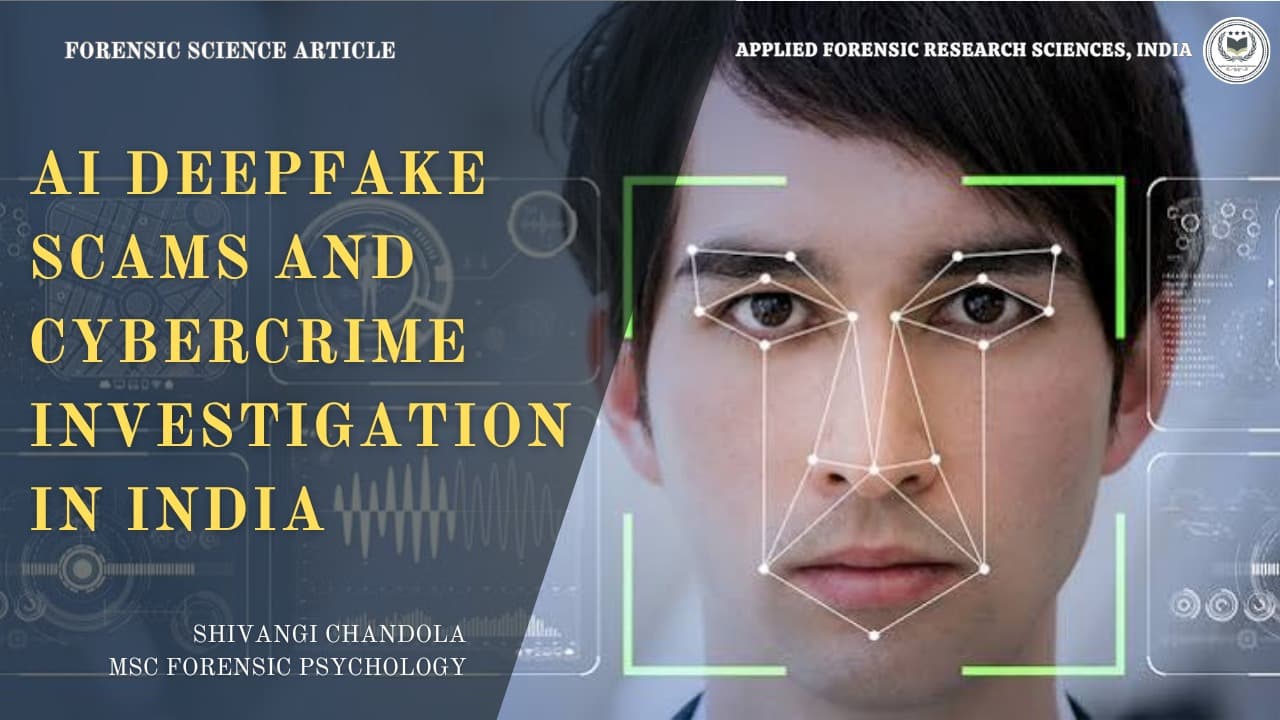
On July 2022, a 73-year-old man named Radhakrishnan in Kozhikode, Kerala, received a WhatsApp video call from someone who looked and sounded exactly like his former colleague, Venu Kumar. The face on the screen was familiar. The voice was right. The caller even dropped the names of common friends to put Radhakrishnan at ease before getting to the point; he urgently needed ₹40,000 for a relative in hospital. Radhakrishnan transferred the money without hesitation. It was only when the same caller rang back asking for another ₹35,000 that suspicion crept in. He called his actual former colleague, who had no idea any of this had happened. Radhakrishnan filed a police complaint, and the Kerala Police Cyber Operations Wing traced the transaction to a private bank in Maharashtra and successfully froze the funds. The face on that video call was never Venu Kumar. It was a ghost, one assembled by artificial intelligence.
This was Kerala’s first recorded deepfake fraud, and it won’t be the last. After what happened in a single WhatsApp call in Kozhikode that year has since grown into one of India’s most serious and fastest-spreading forms of cybercrime.
What Is a Deepfake?
The word “deepfake” is a combination of “deep learning” and “fake,” and it refers to synthetic media like video, audio, or imagery created by using AI algorithms that can convincingly replace one person’s face, voice, or both with someone else’s. The technology is rooted in a class of AI architecture called Generative Adversarial Networks, or GANs, where two algorithms essentially compete against each other: one generating fake content, the other tries to detect it as fake. Over thousands of repetitions, the generator gets better and better at producing content that even the detectors cannot differentiate from real, making the result frighteningly realistic.
What made deepfakes a concern for researchers a few years ago was the assumption that creating one required significant technical skill, expensive hardware, and hours of processing time. That assumption is now obsolete. Today, there are more than 50 commercially available apps that can generate a deepfake video in minutes. Some can perform real-time face and voice swapping during a live video call, meaning the person you are speaking to can appear to be someone else entirely, with no perceptible lag. Over one million deepfake videos were reported globally in 2024. The technology has moved from film studios and research labs into the hands of anyone with a smartphone and bad intentions.
In India, the consequences have been severe. Deepfake cases have surged by 550 per cent since 2019, with losses projected to reach ₹70,000 crore in 2024 alone. A 2025 analysis found that 47 per cent of Indian adults have either been victims of, or personally know someone who has been a victim of, an AI voice-cloning or deepfake scam, nearly double the global average of 25 per cent. India’s scale of smartphone adoption, combined with still-developing AI literacy among the general public, has made it particularly fertile ground for this kind of fraud.
How the Crime Is Actually Carried Out:
It begins long before any call is made. Criminals start by harvesting publicly available data from social media, such as photographs, short video clips, and voice notes. A few seconds of footage is genuinely all that is needed to train a face-swapping model on someone’s appearance. A brief audio clip is sufficient to clone a voice with enough fidelity to deceive someone who knows that voice well. This is why the fraudster who impersonated Venu Kumar to Radhakrishnan also knew to mention their common friends- that information, too, was likely drawn from social media profiles. The digital footprints most people leave online without a second thought are a scammer’s raw material.
Once the synthetic media is ready, the attacker initiates contact through WhatsApp, Zoom, or Instagram, appearing as a trusted face or voice. The narrative is almost always built around urgency: a medical emergency, a legal crisis, a business transfer that cannot wait, because urgency disrupts rational thinking. Among Indian victims of AI voice scams who suffered monetary loss, almost half lost sums of over ₹ 50,000 that people would ordinarily take time to think through, but didn’t, because they believed they were helping someone they knew and trusted.
In more sophisticated, large-scale operations, deepfakes are weaponised differently. A Bengaluru-based chartered accountant lost ₹23.20 lakh in late 2024 after encountering Facebook advertisements featuring convincing AI-generated videos of Mukesh Ambani, Narayana Murthy, and Sudha Murty apparently endorsing a stock investment scheme. These weren’t personal calls; they were broadcast frauds, using celebrity likenesses as bait to draw in thousands of potential victims at once. The CA who fell for it was a financial professional. The technology, not naivety was the deciding factor. Once money is transferred, it is routed through networks of mule bank accounts, UPI IDs, or cryptocurrency wallets specifically designed to obscure the trail and delay detection.
There is also a darker, non-financial category of deepfake crime: the creation and circulation of non-consensual synthetic intimate imagery, which disproportionately targets women. In 2023, a viral video surfaced of actress Rashmika Mandanna in a deeply inappropriate context. An investigation by Delhi Police’s Special Cell revealed that a 24-year-old BTech graduate from Guntur had created the deepfake by grafting Mandanna’s face onto a video originally posted by a British-Indian woman, absurdly, to increase followers on a fan page. The case triggered national outrage, drew condemnation from Prime Minister Modi, and resulted in Mandanna being appointed as a national ambassador for cyber safety. It also exposed how easily deepfakes can be created for reasons far removed from financial gain, and how the reputational and emotional damage to victims is no less real for that.
The Legal Framework in India and its Gap
India does not yet have a standalone law specifically targeting deepfakes, but a layered statutory framework covers the essential criminal ground. The primary instrument is the Information Technology Act, 2000. Section 66C targets identity theft through fraudulent use of another person’s unique identification features, punishable by up to three years’
imprisonment and a fine. Section 66D penalises cheating by impersonation using a computer resource. Section 66E criminalises the capture or publication of private images without consent, carrying a punishment of up to three years’ imprisonment and a fine of up to ₹2 lakh. Sections 67 and 67A prohibit the publication or transmission of obscene and sexually explicit material in electronic form.
From July 2024, the Bharatiya Nyaya Sanhita, 2023 (BNS) replaced the IPC as India’s main criminal code. Section 353 penalises false or misleading statements causing public mischief, with imprisonment of up to three years, while Section 111 specifically covers organised cybercrimes, including deepfake-enabled fraud rings. Section 356 applies to criminal defamation where a deepfake is designed to damage someone’s reputation.
The honest challenge is enforcement. Forensic capacity across police forces remains uneven, and the Deepfakes Analysis Unit has specifically flagged that detecting deepfake audio remains a significant technical hurdle. India’s laws have kept pace with the crime in their intent; the institutions enforcing them are still catching up in capacity.
How Cybercrime Investigation Actually Works in India?
When a deepfake fraud is reported, investigators simultaneously pursue two tracks: the money and the media. On the financial side, they work with banks to freeze mule accounts before funds can be moved. The Kerala case demonstrated this working well, with the transaction frozen at a Maharashtra bank within days of the complaint. On the forensic side, analysts examine the deepfake content itself for telltale artefacts like unnatural blinking, lighting inconsistencies, and audio-visual sync errors that betray AI generation. Formal notices are sent to platforms like Meta to compel disclosure of account data and IP addresses, with cross-state coordination handled by the Indian Cyber Crime Coordination Centre (I4C).
Victims can initiate this process by calling 1930 or filing at cybercrime.gov.in, after which cases are escalated to specialised units like Delhi’s IFSO cell or state-level cyber wings. The process works best when victims report immediately and preserve all evidence, because every hour of delay gives perpetrators more time to move money and erase digital traces.
Conclusion
More than 92,000 deepfake digital arrest cases were reported in India in 2024 alone. Behind each of those numbers is a person who answered what they thought was a familiar face, or a trusted voice, or a credible authority, and discovered too late that they were looking at a machine’s imitation of reality. The technology making this possible is not slowing down; if anything, the gap between what AI can fabricate and what the human eye can detect is widening every year.
India’s legislative responses, like the IT Act, the BNS, the DPDP Act, and the amended IT Rules, provide a serious foundation for accountability. But laws are reactive instruments. They respond to crimes that have already happened, to victims who have already been harmed. The more consequential frontier is public awareness: helping ordinary citizens understand what
deepfakes are, why they work so effectively on the human mind, and what simple, consistent habits can interrupt them.
Radhakrishnan in Kerala eventually got his money back. Many others do not. The difference between those two outcomes usually comes down to how quickly the victim recognised something was wrong and how fast they picked up the phone to dial 1930. In a landscape where artificial intelligence is increasingly indistinguishable from lived reality, that phone call made in time may be the most important thing a person can do.
References:
- Medbound Times. (2023). Kerala’s First Deepfake Scam: Loses Rs 40,000 in Desperate Plea for Sister’s Hospital Help. https://www.medboundtimes.com/internship/first-case-in-kerala-for-deepfake-technology-by-city-commissioner-rajpal-meena
- Deccan Herald. (2025). CA falls prey to deepfake video scam, loses Rs 23 lakh. https://www.deccanherald.com/amp/story/india/karnataka/bengaluru/ca-falls-prey-to-deepfake-video-scam-loses-rs-23-lakh-3370268
- Deccan Herald. (2024). Culprit behind deepfake video of actor Rashmika Mandanna arrested — Delhi Police. https://www.deccanherald.com/india/culprit-behind-deepfake-video-of-actor-rashmika-mandanna-arrested-delhi-police-2857478
- Deccan Herald / Tribune India. (2023). Delhi Police questions Bihar youth in Rashmika Mandanna’s deepfake video case. https://www.tribuneindia.com/news/entertainment/delhi-police-question-bihar-youth-in-rashmika-mandannas-deepfake-video-case-562559
- BW Businessworld. (2024). Deepfake cases in India surge 550% since 2019, projected losses to hit ₹70,000 Cr in 2024: Pi-Labs Report. https://www.businessworld.in/article/indias-deepfake-cases-up-550-losses-may-hit-rs-70000-cr-by-2024-report-541202
- ORF Online / Observer Research Foundation. (2026). Deepfakes and financial cybercrime: India’s multi-layered response. https://www.orfonline.org/expert-speak/deepfakes-and-financial-cybercrime-india-s-multi-layered-response
- Point Predictive. (2025). Emerging threats of AI-enabled fraud in 2025. https://pointpredictive.com/emerging-threats-of-ai-enabled-fraud/
- Press Information Bureau, Government of India. (2025). India well-equipped to tackle evolving online harms and cybercrimes. https://www.pib.gov.in/PressReleasePage.aspx?PRID=2154268
- Global Law Experts. (2026). Deepfake Law India. https://globallawexperts.com/deepfake-law-india/
- SS Rana & Co. / Bar and Bench. (2025). AI and Deepfakes: Navigating the digital revolution and its dark side. https://www.barandbench.com/view-point/ai-and-deepfakes-navigating-the-digital-revolution-and-its-dark-side
- LawArticle.in. (2025). Deepfakes in India: A legal analysis of emerging challenges and regulatory framework. https://lawarticle.in/deepfakes-in-india-a-legal-analysis-of-emerging-challenges-and-regulatory-framework/
- India TV News. (2025). Govt submits status report on deepfakes: AI scams under scrutiny. https://www.indiatvnews.com/news/india/govt-deepfake-report-ai-scams-election-misuse-govt-report-delhi-high-court-2025-03-27-982608
- Deccan Herald. (2024). Trust in the digital age — Opinion. https://www.deccanherald.com/amp/story/opinion/trust-in-the-digital-age-3796065
- Tribune India. (2024). Deepfakes, GenAI amplifying romance scams in India, warn researchers. https://www.tribuneindia.com/news/science-technology/deepfakes-genai-amplifying-romance-scams-in-india-warn-researchers-590041
- LawSection.in. (2026). Key provisions related to cybercrimes under Bharatiya Nyaya Sanhita, 2023 (BNS). https://lawsection.in/cyber-crimes-under-bharatiya-nyaya-sanhita-2023-bns/
- Legal Service India. (2026). Cyber crimes in India: A legal analysis with special reference to the IT Act 2000, BNS 2023 and BNSS 2023. https://www.legalserviceindia.com/Legal-Articles/cyber-crimes-in-india-a-legal-analysis-with-special-reference-to-the-information-technology-act-2000-bns-2023-and-bnss-2023/